

Zixia Cave
The Enchanting Entrance and Inner Wonders of Zixia Cave
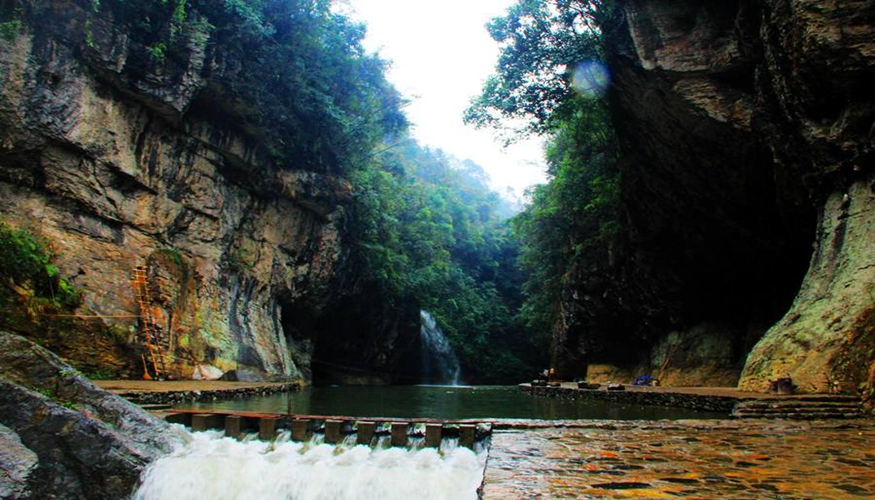
The most famous tourist attractive in Yongzhou is the Zixia Cave, which, 0. 5 km from the Temple to Emperor Shun, Zixia Cave is actually a huge cave named after the high rock at its entrance. If visitors walk down the steps to the foot of the rock and look back, they’ll find the huge rock is veiled in purple glow in the sunshine and tiny spring oozes down from its top.
Shallow as the outer cave is, visitors already feel very cool here in hot summer days. To the right is the entrance to the inner cave, which is so small that only one visitor can pass through it alone time. And please watch your head when you’re stumbling down the steep steps, because the feet of the fellow behind you may well be just above your head Yet it is quite worthwhile to go on, for you soon reach a hall that can contain more than 1, 000 people. It is a museum of all kinds of grotesque stalactites and stalagmites which, seen from different angles, offer various fantastic sights.
A Symphony of Karst Landscapes and Natural Acoustics.
The Water Dripping on Lotus Blooms, the Monkeys Guarding the Cave, the non-action Cave, the Reading Hall, the Celestial Fields, the Eight Notes Stone, and the Zigzagging Yellow River are only a few of the numerous rewarding scenes here The cave is also a huge acoustic device, In which, as you walk on, the underground stream babbles a lullaby, then plays a waltz, then offers a military march, and finally sing falsetto like the Beatles. Actually the mystic underground paradise has been a well-known tourist destination since the Tang dynasty(618-907).
Historical Legacy and Modern Cultural Revitalization
Beyond its natural acoustic wonders, the cave boasts a profound historical legacy. It is also known as Chonghua Cave, named after Emperor Shun, whose personal name was Chonghua, as he is said to have visited this site over 4,000 years ago. The cave walls still bear stone carvings and ink inscriptions left by literati and historical figures since the Tang Dynasty, offering visitors a rare chance to converse with the past. During the Ming Dynasty, the renowned geographer and traveler Xu Xiake was so captivated by the cave during his expedition to Jiuyi Mountain that he stayed for four consecutive nights and ranked it as the second most famous cave in southern Chu in his Chu Travel Diary.
Today, this ancient wonder has been revitalized with modern technology while preserving its original charm. Visitors can now experience immersive dome-movie projections and the live theatrical performance Two Consorts Seeking Their Husband, which vividly recounts the legendary love story and Emperor Shun’s virtuous rule. After exploring the ethereal underground palace, tourists can step out into the adjacent Nanfeng Market, a bustling cultural and commercial hub. Here, they can enjoy trendy domestic cultural products, authentic local snacks, and intangible cultural heritage experiences, seamlessly transitioning from the mystical silence of the cave to the vibrant, smoke-and-fire hustle of Yongzhou’s culinary scene.