

Fanjing Mountain(Fanjing Shan)
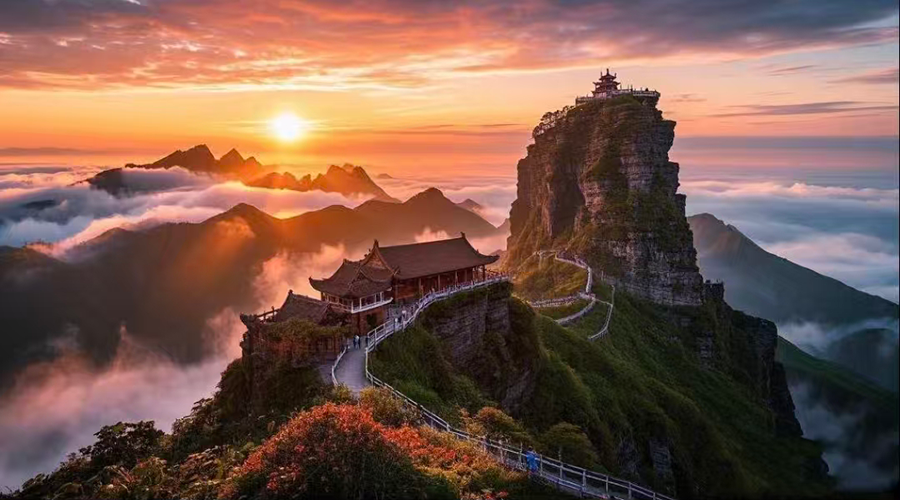
||Fanjing moutain, Fanjing shan, Mount Fanjing, Travel from Fenghuang to Fanjing shan||Fanjing moutain, Fanjing shan, Fanjing Mountain how to get there, Travel from Fenghuang to Fanjing shan||Travel to Fanjing Mountain (Fanjingshan/Mount Fanjing) — China’s UNESCO World Heritage & sacred Buddhist mountain! Discover iconic Mushroom Stone, Red Cloud Golden Summit, misty cloud seas and rare golden snub-nosed monkeys on your Guizhou mountain journey
Travel to Fanjing mountain — explore Mount Fanjing (Fanjingshan), China’s sacred UNESCO gem of red karst peaks, floating cloud seas and rare golden monkeys! Home to the iconic Mushroom Stone and Red Cloud Golden Peak, Fanjing mountain weaves together ancient Buddhist heritage and unspoiled Wuling Mountain scenery. Discover the magic of this spiritual natural wonder on our curated Fanjing mountain travels.
Nestled at the junction of Tongren City’s Jiangkou, Yinjiang, and Songtao counties in Guizhou Province, Fanjing Mountain stands as the highest peak of the Wuling Mountains, its summit piercing the clouds at 2570 meters above sea level.
Unlike the karst landscapes that surround it, this ancient metamorphic rock “island” has stood untouched for 100 million years—an ecological sanctuary where the world’s last remaining subtropical primitive forest clings to its slopes. Known as “Brahma’s Pure Land,” it is a quiet counterpoint to bustling tourist hubs, preserving the raw, unspoiled grandeur that once drew Buddhist pilgrims and naturalists alike.
About Fanjing Mountain
The Ecological Island: A Covenant of Time
At the heart of Fanjing Mountain lies a geological anomaly: a metamorphic rock mass rising from the surrounding karst lowlands to form a unique “ecological island.” This sanctuary shelters over 7,900 species of flora and fauna.
Cloaked in a 97% forest canopy, the air here is a tonic, humming with 120,000 to 180,000 negative oxygen ions per cubic centimeter—earning it the revered title of “China’s Natural Oxygen Bar.”
A Sanctuary for Earth’s Living Treasures
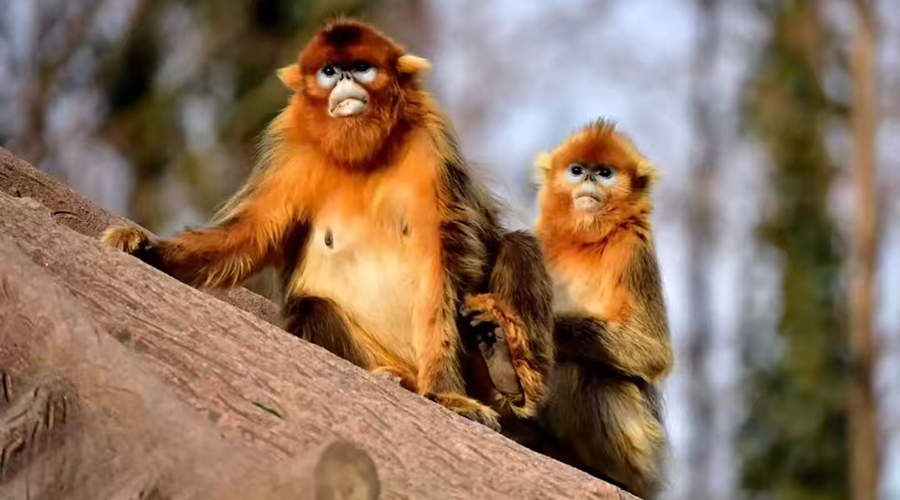
Fanjing Mountain is the last vital bastion of the Guizhou golden snub-nosed monkey (dubbed “the Earth’s only child”), a critically endangered species with a fragile population of just over 700. These playful, social primates—distinguished by their lush golden manes and striking blue facial markings—nimbly dart between 2,000-meter-high Fanjing firs at dawn, their high-pitched calls echoing across mist-shrouded valleys.
This globally significant biodiversity hotspot teems with other remarkable wonders:
- Wildlife: White-necked long-tailed pheasants, resplendent in iridescent emerald-green plumage, dart swiftly through sun-dappled undergrowth. Elusive clouded leopards leave faint paw prints in damp mountain mud, while shy pangolins curl into impenetrable scaly balls when startled. High above, majestic black eagles soar on thermal currents, sharply scanning the craggy peaks for unsuspecting prey.
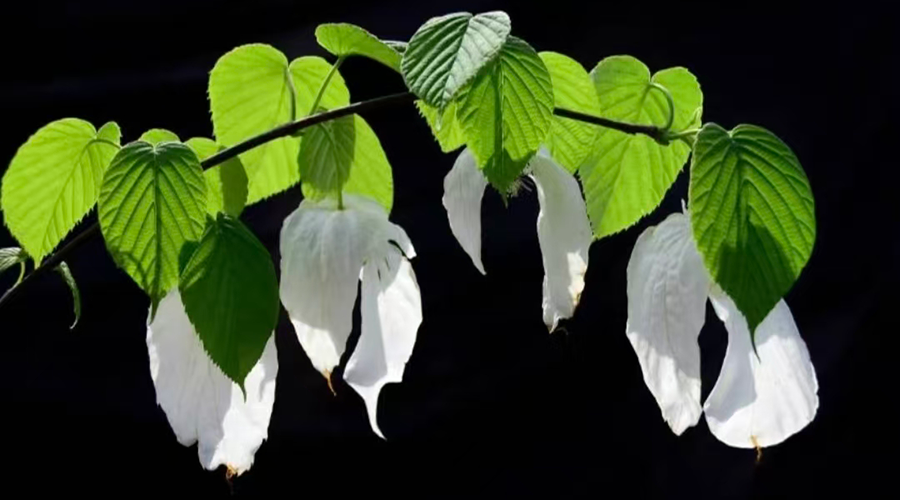
- Flora: Ancient Davidia involucrata (dove trees) burst into bloom in April, their delicate white bracts fluttering like a thousand birds taking flight at the slightest breeze. The Abies fanjingshanensis (Fanjing fir), a rare prehistoric conifer, stands sentinel at over 30 meters tall, its evergreen needles releasing a fresh, invigorating resinous scent. Medicinal treasures like Gastrodia elata and Dendrobium fanjingshanense (a rare endemic orchid) cling to shadowed hidden crevices, their time-honored healing uses carefully passed down through generations of local herbalists.
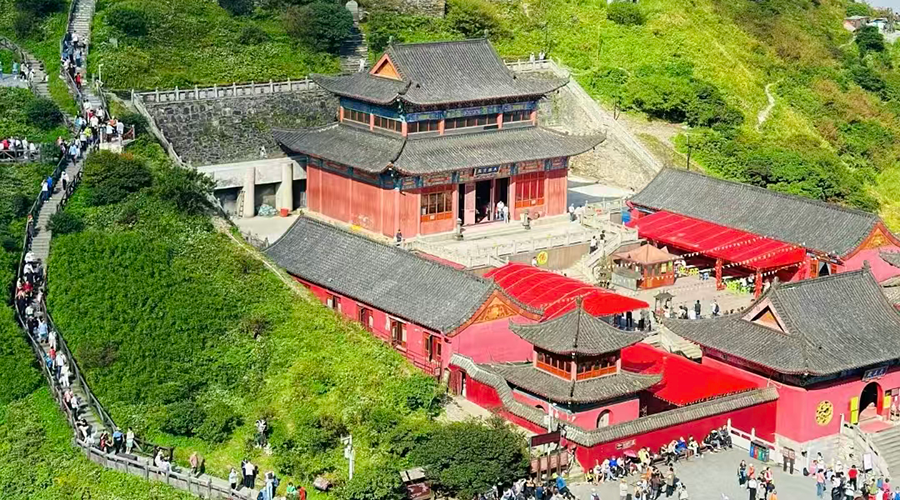
Echoes of Buddhist Serenity
For 1,400 years, Fanjing Mountain has been a sacred Buddhist site—one of China’s five major holy lands dedicated to Maitreya, the Future Buddha.
Chengen Temple, perched halfway up the peak at 2,200 meters, blends seamlessly into the rock face: its red walls and black tiles are framed by autumn maple leaves, and its wooden doors creak with the weight of centuries.
Once home to over a hundred monks, the temple now offers quiet meditation corners where visitors can sit cross-legged as the scent of sandalwood mingles with pine.
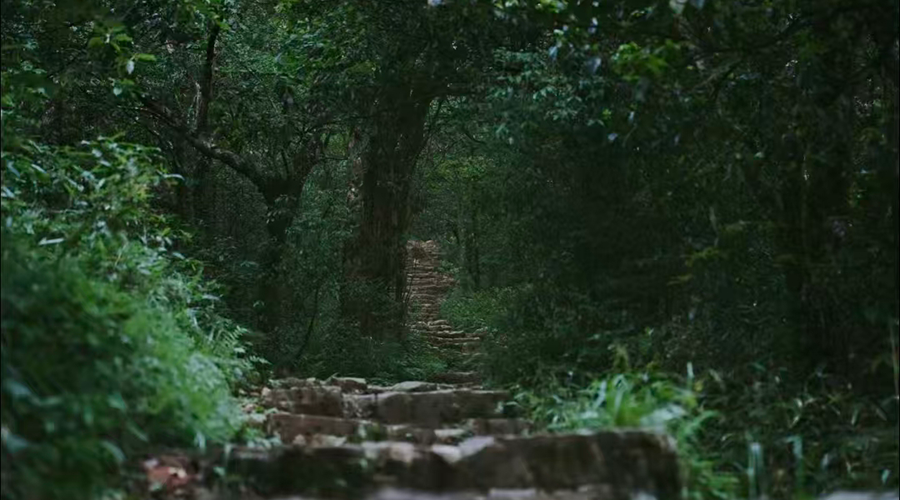
Nearby, abandoned stone paths wind through overgrown terraces—vestiges of a 19th-century hermit village where monks and farmers once grew corn and tea, living off the mountain’s bounty.
Today, only a few elderly villagers return to gather herbs, their stories of pilgrims carrying bronze statues up the peaks and monsoons flooding the valleys linking the mountain’s spiritual past to its wild present.
In FanJing Mountain What to see
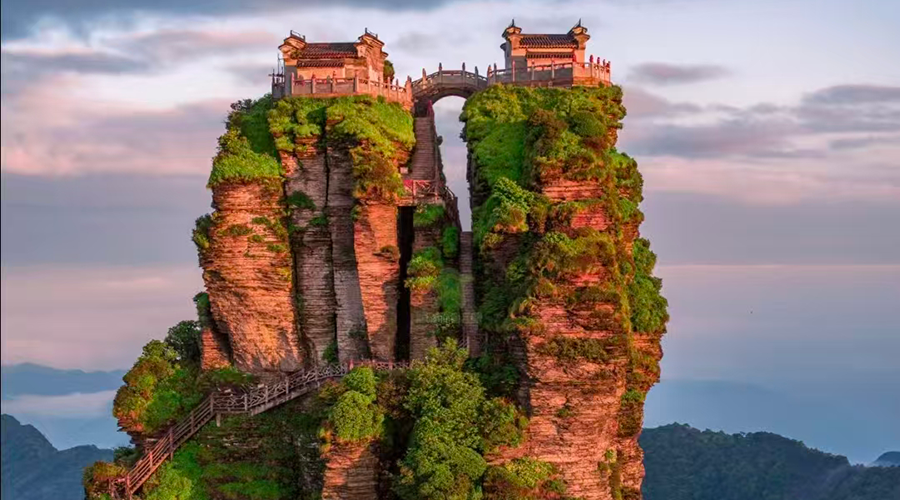
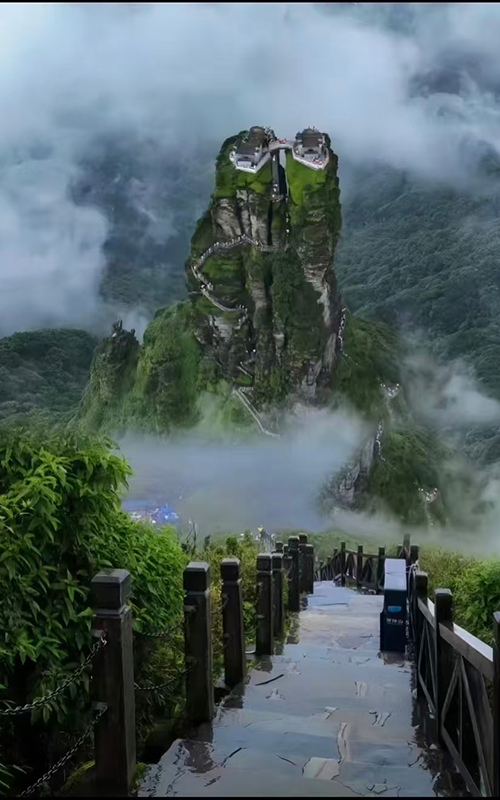
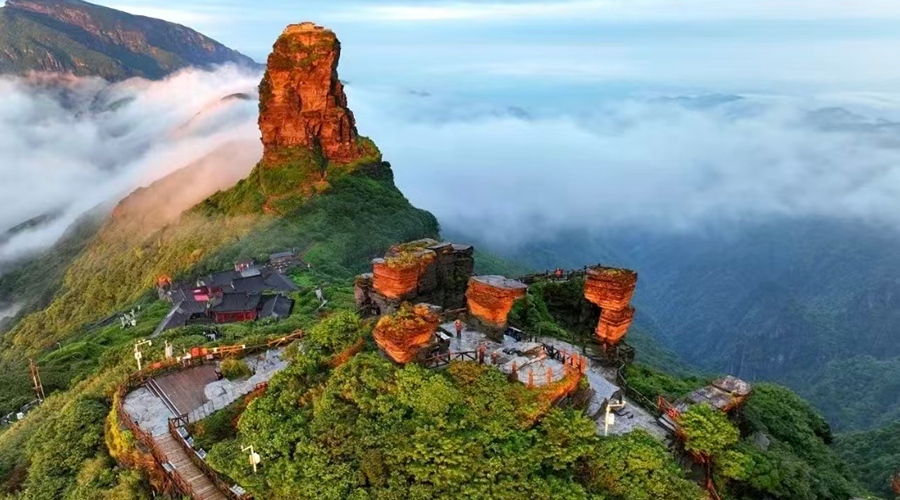
Hongyun Golden Summit:Rising 94 meters above Fanjing Mountain’s main peak, this rugged, jagged spire is split by a dramatic natural fissure known as the “Buddha’s Hand Crack,” connected only by a narrow, ancient stone bridge lined with weathered railings. One side shelters a sacred shrine to Sakyamuni Buddha; the other to Maitreya, the Future Buddha, adorned with flickering butter lamps. Climbing its 800+ worn stone steps—some steeply tilted at 70 degrees, testing visitors’ resolve—feels like ascending to a cloud-bound temple: at dawn, the peak is wrapped in ethereal pink mist (hongyun, or “lucky clouds”), earning it the beloved nickname “Luck Summit.”
At the top, crisp mountain wind whips through the fissure, and the panoramic view stretches endlessly to the horizon: karst peaks rolling like lush green waves, deep valleys filled with billowing white clouds, and the occasional fleeting flash of a golden snub-nosed monkey leaping nimbly between the dense trees far below.
Mushroom Stone:
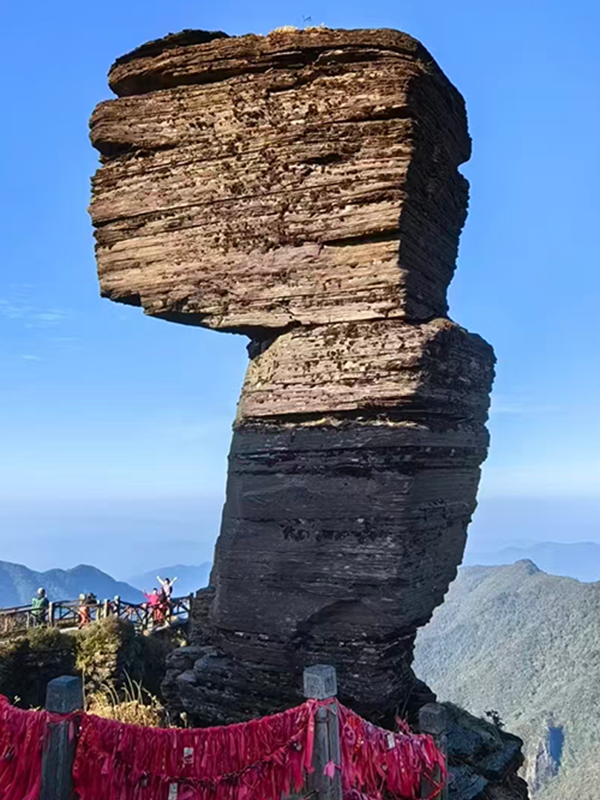
First, it is the mountain’s most iconic landmark. Moreover, it is a beloved natural wonder.Standing 10 meters tall, it perches precariously. Specifically, its base is only 2 meters wide.Additionally, the top spreads like a mushroom cap. Surprisingly, it looks ready to collapse. Yet, it never falls.Over 1 billion years of erosion forged it. For instance, wind carved its edges. Also, rain smoothed its contours.Furthermore, frost expanded tiny cracks. Thus, it symbolizes profound resilience.It has weathered countless earthquakes. Moreover, monsoons deluged its surface. Finally, ice ages froze its core.Despite this, the stone remains steadfast. Ultimately, it is a silent witness to planetary change.
At sunset, the magic of Mushroom Stone reaches its peak: golden sunlight spills over the Wuling Range, gilding its moss-dusted surface and turning the rock’s gray hues into warm amber, while long shadows stretch across the surrounding pine-covered slopes—making it a photographer’s paradise, with shutterbugs vying for the perfect angle to capture its ethereal glow.
Locals hold the stone in deep reverence, passing down legends that it was blessed by ancient Buddhist monks, who believed it channeled the mountain’s spiritual energy. They say touching its cool, damp surface brings enduring good luck—whether for health, fortune, or safe journeys—and visitors often press their palms firmly to its mossy sides, closing their eyes in quiet wish-making. Many leave small offerings of wild azaleas and rhododendrons plucked from nearby trails, their vibrant petals contrasting with the stone’s earthy tones, creating a tender tapestry of devotion that weaves together nature, tradition, and human hope.
Even on foggy days, when the stone is shrouded in mist, it exudes an otherworldly charm, emerging like a ghostly sentinel from the clouds, reminding all who see it of nature’s artistry and the enduring power of resilience.
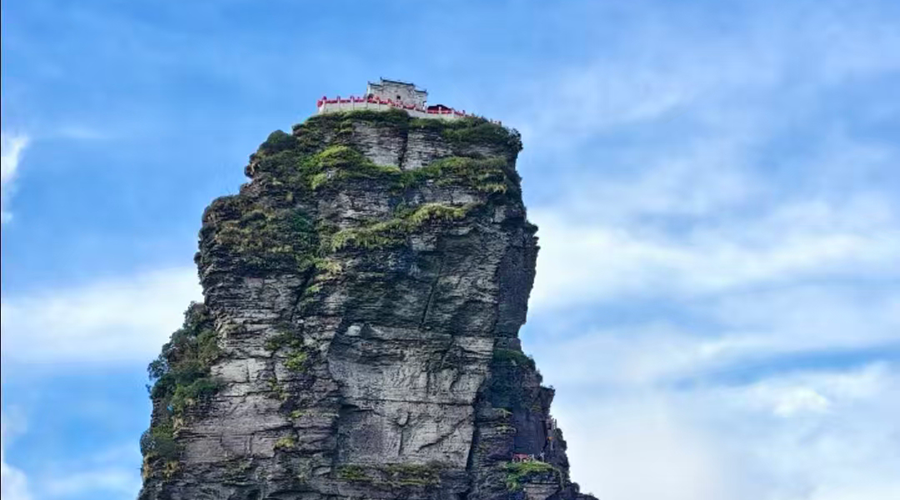
Old Golden Summit:Home to the “Book of Heaven” (a dramatic rock formation stacked like 10+ weathered ancient scrolls, their edges smoothed by centuries of wind and mist) and “Eagle Rock” (a striking outcrop shaped like a majestic bird in mid-flight, wings fully outstretched as if soaring), this iconic peak offers unobstructed 360° panoramic views of the sprawling Wuling Range. On crisp, clear days, the deep valleys below are swallowed by a vast, rolling sea of clouds, leaving only the highest karst peaks exposed like scattered islands in a celestial ocean.
From here, you can also spot the revered “10,000-Meter Sleeping Buddha”: the natural contour of the mountain range, when viewed from the precise right angle, resembles a serene reclining Buddha—its distinct head, broad chest, and outstretched feet all vividly outlined in the rock and lush forest.
Experiences for Every Traveler
- For Adventure Seekers
- Summit Hike: Traverse the 8.5-kilometer “Sky Ladder” trail (from the cableway top to Hongyun Golden Summit). Steep stone steps and chain handrails test your grit; along the way, you’ll pass “Heaven’s Gate” (a narrow rock arch) and “Cloud Platform” (a flat stone where monks once meditated). The reward: panoramic views of the cloud sea that make every sore muscle worth it.
- Canopy Walk: Stroll along a 500-meter suspension bridge strung between ancient pines, 300 meters above the valley. The bridge sways gently with the wind, offering a bird’s-eye view of the forest canopy—where you might spot a dove tree in bloom or a squirrel darting between branches.
- For Relaxation & Reconnection
- Cableway Glide: The 3.5-kilometer Fanjing Mountain Cableway carries you from the valley floor to 2100 meters in 20 minutes. Its glass-bottomed gondolas let you float over forests and peaks: on clear days, you can see golden snub-nosed monkeys playing in the trees; on foggy days, the gondola feels like a boat sailing through a white sea.
- Forest Bathing: Wander the “Oxygen Trail” (a flat, 3-kilometer path through old-growth forest), where the air is thick with pine scent. Pause at wooden pavilions to listen to birdsong (the mountain is home to 160+ bird species, including the rare white-crowned long-tailed pheasant) or sip wild tea brewed by local villagers—its earthy flavor a taste of the mountain.
- For Cultural Immersion
- Buddhist Morning Ritual: Join monks at Chengen Temple for 6 AM chanting: their deep, resonant voices echo through the valley, and the sound of wooden fish (a Buddhist percussion instrument) mixes with the wind. After chanting, enjoy a vegetarian breakfast of mountain wild vegetables (bitter melon, fern tips) and congee—simple, nourishing, and made with ingredients grown on the temple’s small farm.
- Wild Herb Foraging: Guided by local elders (dressed in indigo-dyed Dong clothing), learn to identify edible plants: Houttuynia cordata (a peppery herb used in salads), wild mushrooms (only picked in safe seasons), and Polygonum multiflorum (a root used in tonics). At the end of the tour, brew a pot of herbal tea—its aroma filling the air as you sit on a stone bench, listening to stories of the mountain.
Best Time to Visit
Fanjing Mountain is a canvas painted by the seasons, each unfolding distinct landscapes and experiences that reveal a different side of this sacred peak.
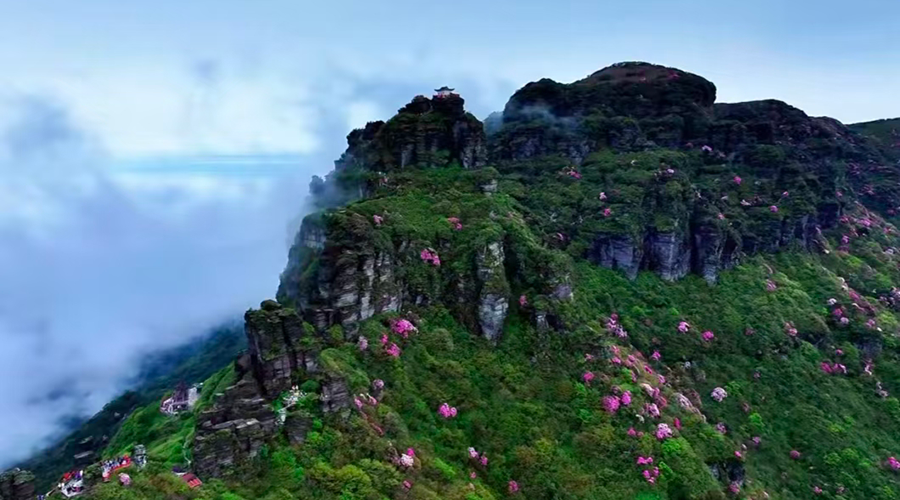
🌸 Spring (March–May):The “Sea of Flowers” takes center stage as the Fanjing mountain awakens from winter slumber, with streams thawing and birds singing melodiously to herald vibrant new growth. Rhododendrons of crimson, pink, and white blanket the sunlit high alpine meadows, while the rare Dove Tree—one of Fanjing’s iconic flora—bursts into bloom, its delicate white bracts fluttering like a thousand birds taking flight. This season also brings increased activity from the Guizhou golden snub-nosed monkeys, with troops foraging for fresh leaves and tender shoots, offering the chance to spot fluffy golden-furred newborns clinging tightly to their mothers. The air is fresh with the scent of blooming flowers and moist soil, making every hike a sensory delight amid nature’s renewed vitality.
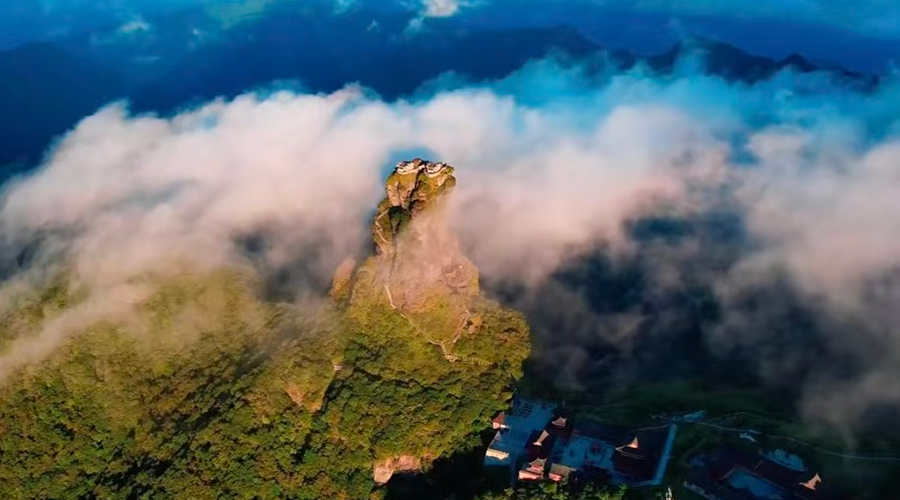
☁️ Summer (June–August): The mountain transforms into a cool, refreshing haven ruled by the “Sea of Clouds” that shrouds valleys at dawn and lingers till mid-morning. With average temperatures hovering around 20°C, it provides a welcome escape from the sweltering lowlands’ oppressive heat. Morning mists roll through the valleys, lifting slowly to reveal peaks floating like islands in a vast white ocean, especially around Hongyun Golden Summit and Old Golden Summit. The dense 97% forest canopy creates a shaded retreat for hiking, with sunlight filtering through leaves to dapple the trails. Occasional light rains refresh the air, enhancing the crisp, oxygen-rich atmosphere that earned Fanjing the title of “China’s Natural Oxygen Bar.”
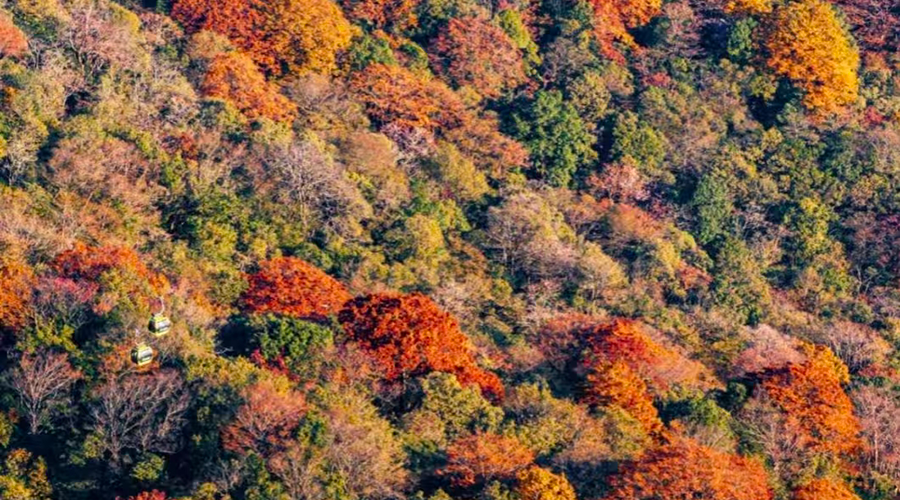
🍁 Autumn (September–November): Crystal clear skies and vibrant, flame-kissed foliage define this beloved season, offering unobstructed panoramic views of the sprawling Wuling Range. The sky deepens into a rich, saturated blue, making the outline of the “10,000-Meter Sleeping Buddha” stand out in striking detail against the distant horizon. The forests erupt into a tapestry of colors—red maples, golden ginkgoes, and deep green Fanjing firs—creating a picturesque backdrop for photography enthusiasts and nature lovers alike. The mild, dry weather and stable visibility make it ideal for exploring both golden summits, with sunset casting a warm, golden glow over Mushroom Stone and the surrounding peaks.
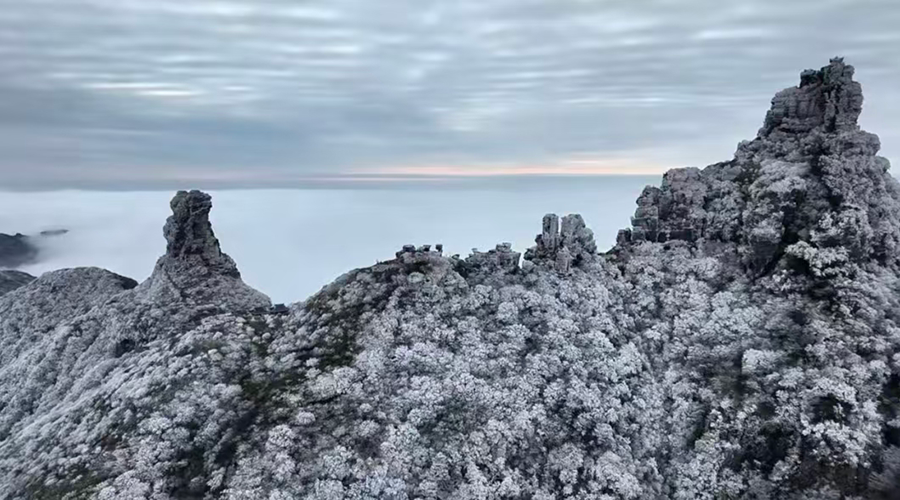
❄️ Winter (December–February): The Fanjing mountain becomes an ethereal “Ice Crystal Kingdom,” cloaked in thick, glistening rime that coats every pine needle, twisted branch, and craggy rock. This magical natural phenomenon turns the forest into a silver wonderland, where sunlight reflects off the ice crystals, creating a dazzling sparkle with every step. The crowds thin out dramatically, leaving only the serene silence of snow-covered trails and the distant toll of Chengen Temple’s ancient bells echoing through the valleys. The cold air sharpens the senses, and the snow-dusted peaks offer a tranquil, almost otherworldly beauty that feels like stepping into a timeless fairy tale woven by nature.
Travel Tips
The opening hours of Fanjing Mountain Scenic Area vary by gate: the East Gate (Jiangkou County, main entrance with cableway) is open from 08:00 to 15:00, and the West Gate (Yinjiang County, hiking route) is open from 08:00 to 13:00. All cableways, sightseeing buses and shuttle services stop operating around 18:00. Due to the rugged mountain trails and potential weather changes, it is not recommended to enter the scenic area after 14:00 for East Gate or 12:00 for West Gate to ensure sufficient time for sightseeing and safe return.
The main ticket price of Fanjing Mountain is 100 RMB per person, with a round-trip sightseeing bus ticket priced at 58 RMB per person (including insurance) and a round-trip cableway ticket at 140 RMB per person (one-way 70 RMB per person). The scenic area implements a daily visitor limit of 8,000 people, so advance ticket booking is mandatory. Never trust cheap tickets offered by local scalpers. The tickets are only valid for the selected gate (East or West Gate) and cannot be used interchangeably.
Tourists can access Fanjing Mountain through two main gates: the East Gate (Jiangkou County) and the West Gate (Yinjiang County). The East Gate is more recommended for most visitors as it has a cableway and wider trails with higher safety. The West Gate is suitable for experienced hikers seeking a primitive hiking experience.
Essential travel preparations: Wear non-slip hiking shoes as the stone steps to the summits are steep (some at 70 degrees) and may be slippery in rainy or foggy weather. Bring warm clothing and rain gear, as the mountain top temperature is 8-10°C lower than the foot and the weather changes suddenly. Protect the ecological environment by not picking plants, feeding wildlife (especially the endangered Guizhou golden snub-nosed monkeys) or littering.
Fanjing Mountain